How to Screen 1,000+ Resumes in Minutes Using AI
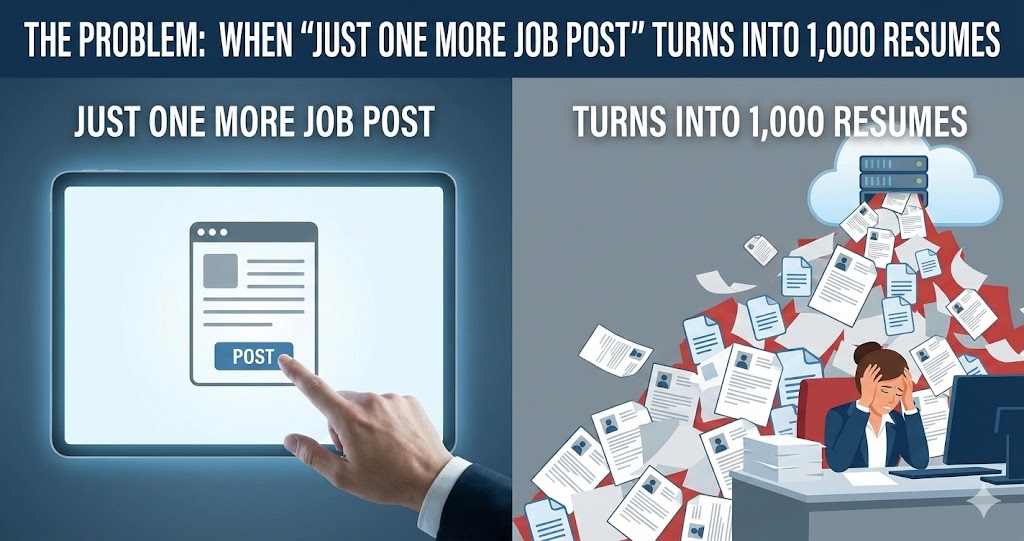
The Problem: When “Just One More Job Post” Turns Into 1,000 Resumes
High application volume is no longer an exception. For many roles, especially in growing teams, hundreds or even thousands of resumes arrive within days.
Recruiters are still expected to screen carefully, shortlist fairly, and move fast. In practice, that means long hours spent filtering resumes, switching between systems, and trying not to miss something important.
This is usually the point where teams realise that bulk resume screening is no longer just time-consuming. It starts affecting recruiters work and how hiring decisions are made, At this stage, HR teams typically begin looking for a way to introduce structure without losing recruiter control, which is where tools like Jobdrive AI start becoming relevant.
The Cost of Ignoring the Problem
Most teams try to manage the volume by working longer hours or tightening deadlines. That works for a while.
Over time, the impact becomes visible:
-
- Time-to-hire stretches without a clear reason
- Candidates drop out due to delayed responses
- Hiring managers question the quality of the shortlist
- Recruiters experience frustration and inconsistency
What often goes unnoticed are the candidates who were never reviewed properly. Missed hires don’t show up in reports, but they affect outcomes just as much as bad hires.
Without a structured screening layer, these issues tend to repeat themselves with every high-volume role. This is often when teams look for support systems like Jobdrive AI to stabilise the process before it starts affecting outcomes.
Modern Hiring Expectations are higher now
Hiring teams are meant to deliver speed, fairness, and transparency at the same time.
Recruiters are meant to:
-
- Handle volume without compromising evaluation quality
- Provide explainable shortlists.
- Maintain consistency across roles and recruiters
- Scale hiring without constantly adding effort
Candidates expect timely communication. Leadership expects predictable hiring timelines.
Meeting these expectations consistently usually requires screening processes that can scale. This is where AI-supported systems, including Jobdrive AI, are increasingly used to support recruiters rather than replace them.
Why Manual Resume Screening Breaks at Scale
Manual screening works when numbers are small. At scale, it becomes difficult to manage.
Common issues include:
-
- Different recruiters applying criteria differently
- Over-reliance on keyword matching
- Difficulty reviewing non-linear or unconventional profiles
- Limited visibility into how screening decisions were made
Even experienced recruiters struggle to stay consistent when reviewing large volumes under time pressure. The problem isn’t capability. It’s that manual screening doesn’t scale well.
At this point in the workflow, tools like Jobdrive AI are typically used to handle the first layer of screening, allowing recruiters to focus on evaluation instead of filtering.
How AI Supports Bulk Resume Screening
AI adds structure to screening without removing human judgment.
In bulk resume screening, AI helps by:
-
- Processing large resume volumes quickly
- Matching profiles against defined role criteria
- Applying consistent logic across all applications
- Reducing errors caused by fatigue and time pressure
Jobdrive AI is designed to fit into existing hiring workflows. It supports recruiters by handling the bulk resume screening and organization of resumes, while final review and decisions remain with the hiring team.
The goal is not to automate hiring decisions but to make recruiter involvement more effective.
See What Bulk Resume Screening Should Feel Like
Bulk resume screening doesn’t need to overwhelm HR teams or slow hiring down.
If your team regularly handles high application volumes, it may be worth reviewing how screening is currently structured and where support could help.
👉 Book a personalized demo of Jobdrive AI
See how AI-supported screening can make high-volume hiring more consistent, controlled, and manageable.
